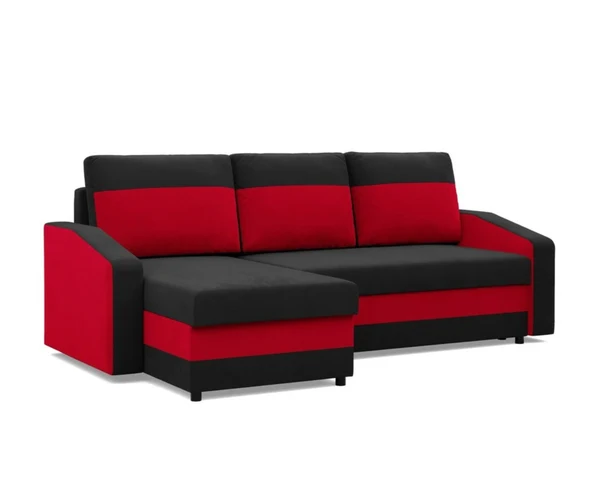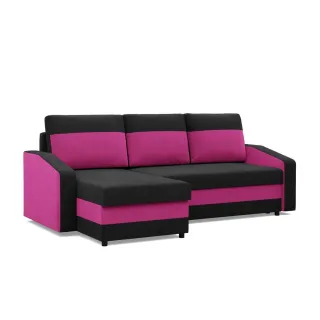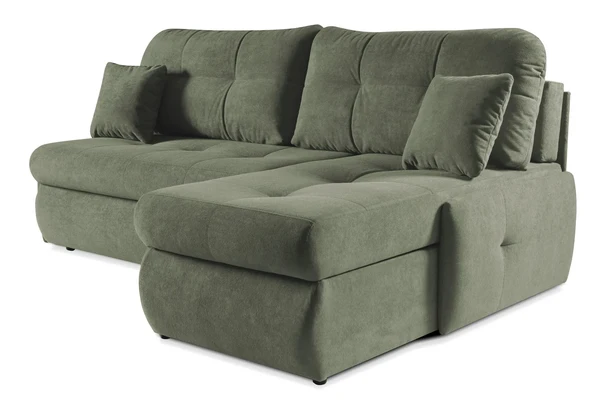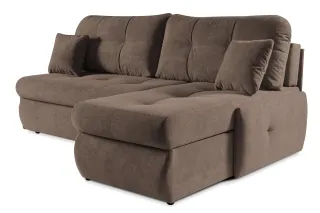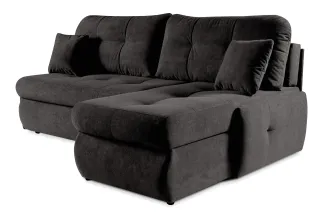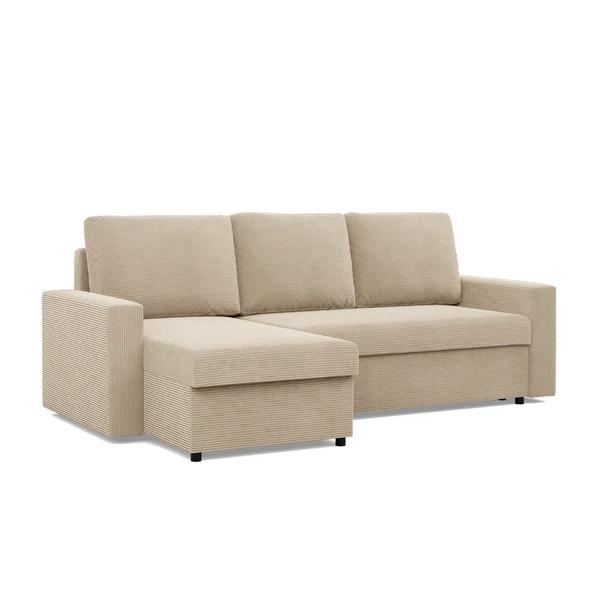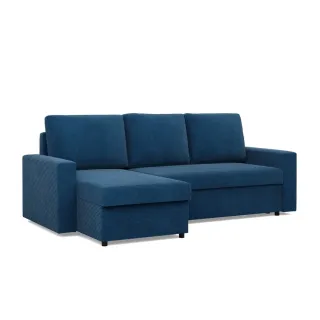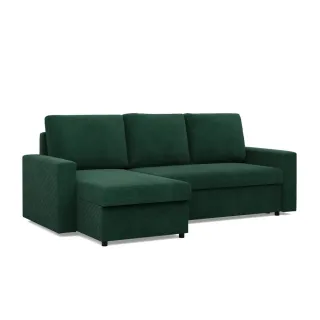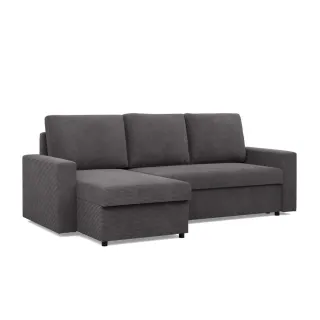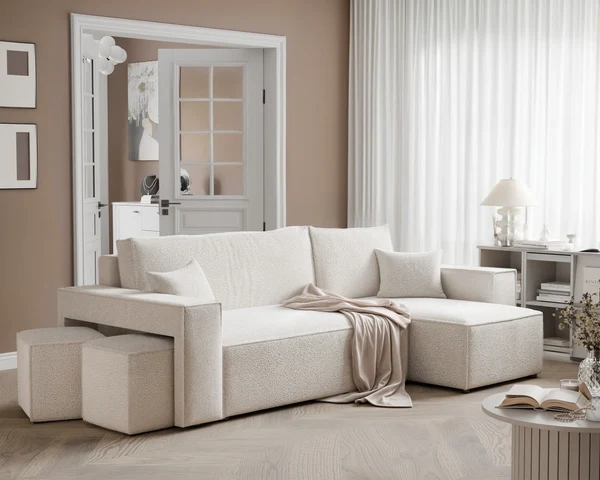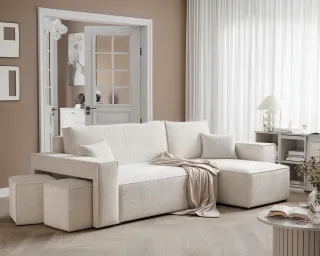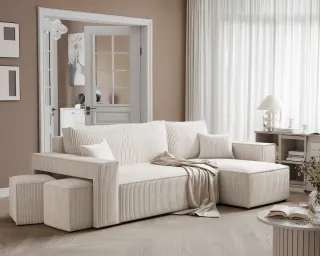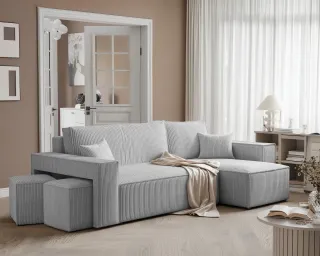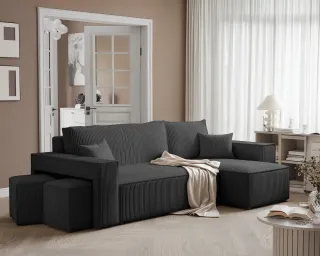
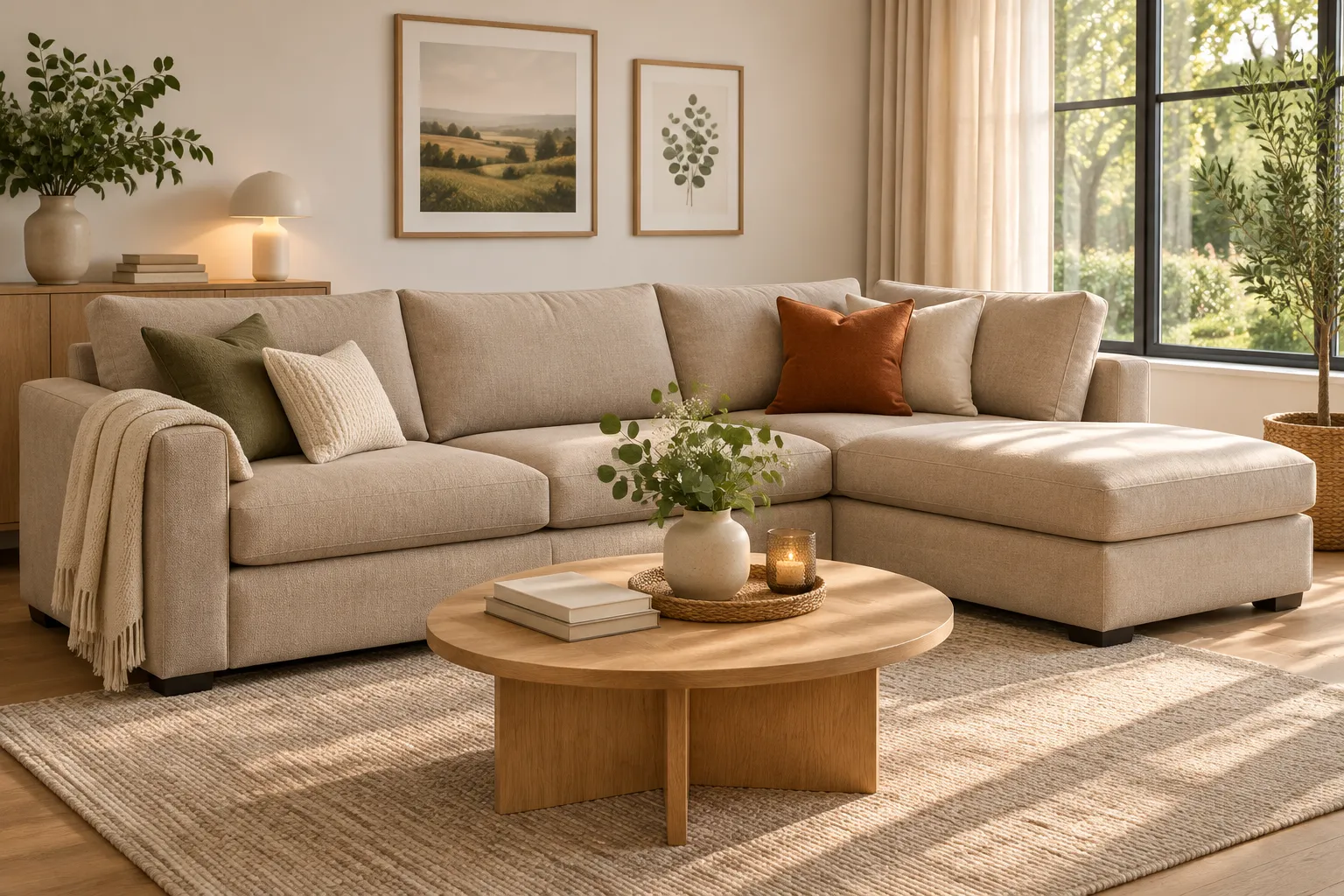
A corner sofa is one of the most important pieces of furniture in the living room. It’s where we relax after work, spend time with family, welcome guests and sometimes even sleep. That’s why, when choosing a corner sofa, it’s important to think not only about the look or the price, but also about comfort, size, fabric and functionality.
To help make sure your purchase brings enjoyment for a long time, we’ve put together 7 practical tips to help you choose the best corner sofa for your home.
1. Measure your living room space accurately
One of the most common mistakes is choosing a corner sofa just from a photo, without taking the actual room size into account.
Even the most beautiful piece of furniture can be impractical if it takes up too much space, blocks movement or makes it hard to arrange other furniture comfortably.
Before buying, measure:
- The walls where the corner sofa will stand.
- The distance to the TV and coffee table.
- Walkways, doors and windows.
- The space needed to open the sofa, if it has a sleeping function.
Also pay attention to the seat depth, overall height and armrest width.
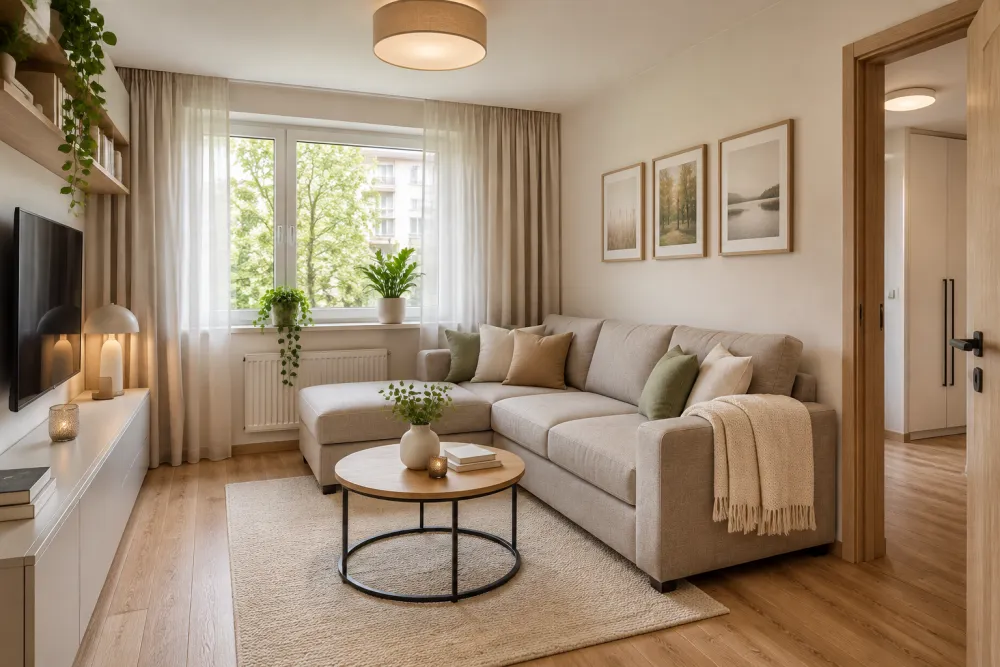
Tip: for a smaller living room, a compact corner sofa with higher legs often works best. This kind of piece looks lighter visually and does not overwhelm the space.
2. Choose the correct corner direction
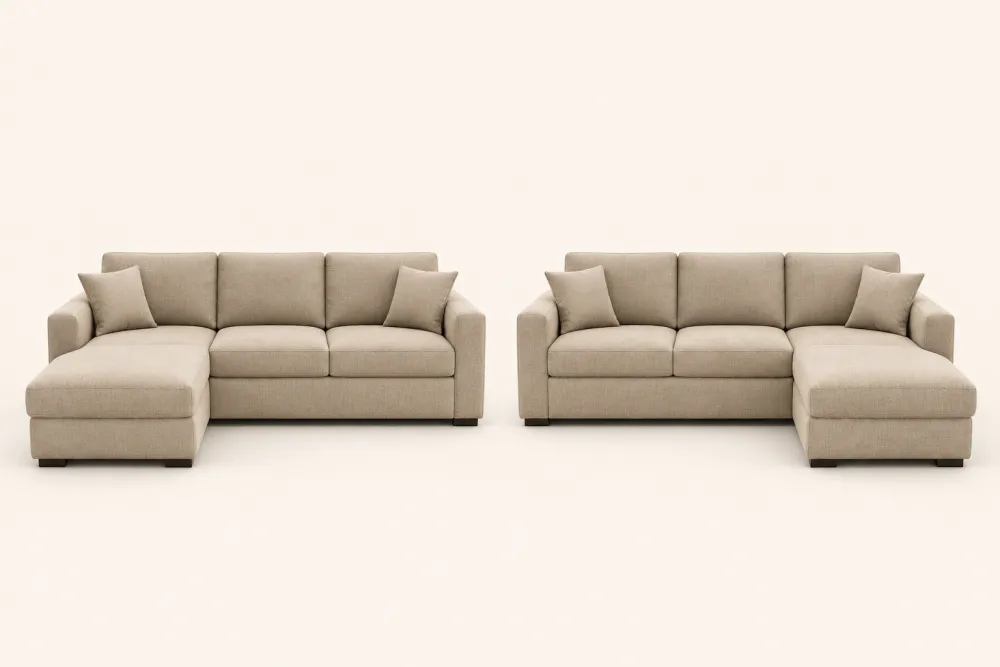
Left-hand or right-hand corner sofa? This is one of the most important questions before buying.
The corner direction shows which side the chaise (corner part) of the sofa is on. Jaukisofa.lt gives the direction by looking at the sofa from the front: on a left-hand corner sofa, the chaise is on the left; on a right-hand one, it is on the right. Other manufacturers may label this differently, so it is always worth checking the diagram for the specific model.
When choosing, think about:
- Which side is most convenient for the chaise?
- Will the corner sofa get in the way of moving around the room?
- Will it block the balcony door or other furniture?
- Does the chosen direction suit the layout of the living room?
Tip: before ordering, mark out the footprint of the future sofa on the floor with masking tape. It makes it easier to picture the size and layout.
3. Consider whether you need a sleeping function
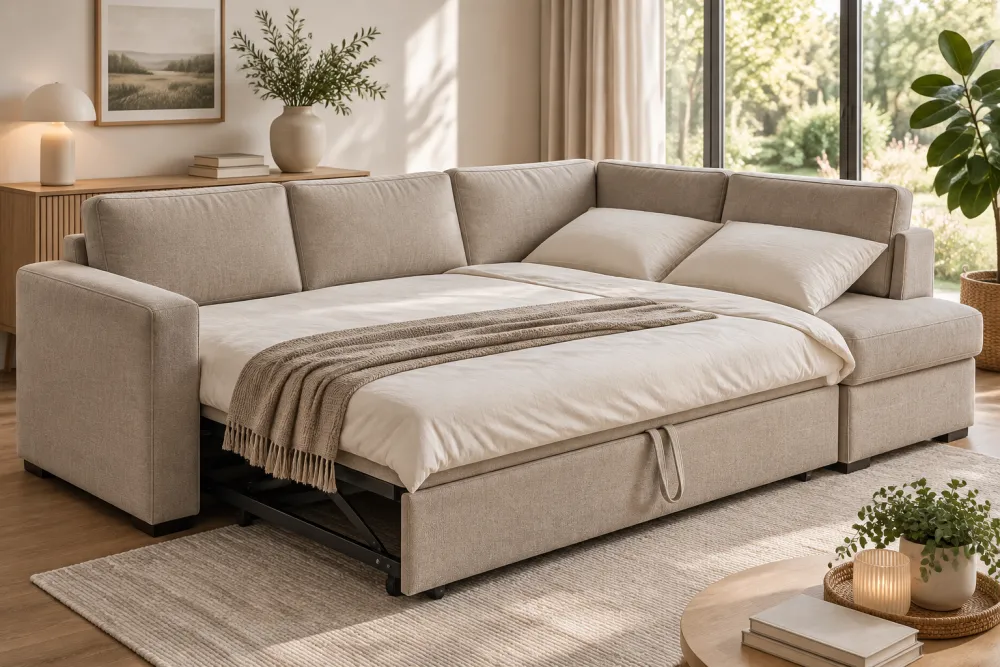
Corner sofas with a sleeping function are especially popular for their practicality. By day, they are a comfortable place to sit, and when needed they can turn into an extra bed.
This is a useful choice if:
- You often have guests staying overnight.
- You live in a smaller flat.
- You want one piece of furniture to serve several purposes.
- You need extra sleeping space.
If you plan to sleep on the corner sofa every day, be sure to check the size of the sleeping area, the flatness of the surface, the base and the opening mechanism.
It is also worth choosing a model with bedding storage box – it’s a handy place to keep duvets, pillows or other items.
4. Don’t forget comfort and construction
A corner sofa should be not only attractive, but also comfortable every day.
Comfort depends on several factors:
- Seat height and depth.
- Backrest shape and back support.
- Armrest height.
- Seat filling.
- Construction stability.
Some people prefer deeper, softer corner sofas you can sink into comfortably, while others prefer firmer models that are easier to get up from.
When buying online, we recommend carefully checking the technical dimensions and product description.
5. Choose the fabric to suit your lifestyle
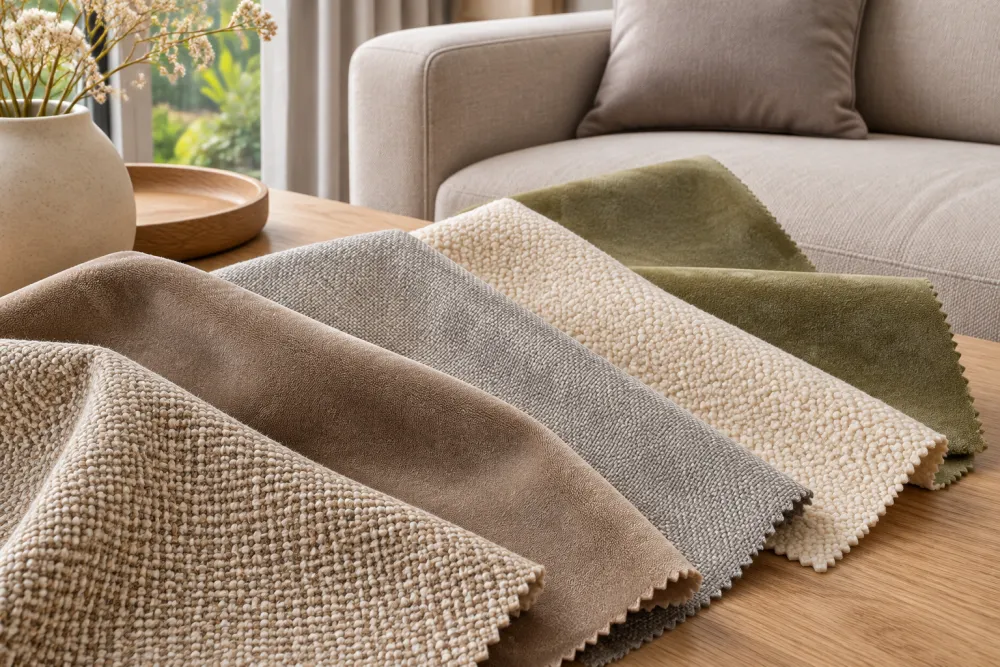
The corner sofa fabric affects not only the look, but also care and everyday use.
If you have children or pets at home, it is worth choosing a fabric that is easy to care for and more resistant to wear.
Pay attention to:
- The fabric’s abrasion resistance.
- Cleaning and care requirements.
- The surface texture.
- The practicality of the colour.
- The fabric properties stated by the manufacturer.
Light fabrics make a living room feel more spacious and cosy, but on some of them stains may be more noticeable. Mid-tone or more textured fabrics can sometimes hide signs of everyday use better.
Tip: if you have pets, pay attention not only to the fabric colour, but also to the weave and the manufacturer’s care recommendations.
6. Match the colour and design to your interior
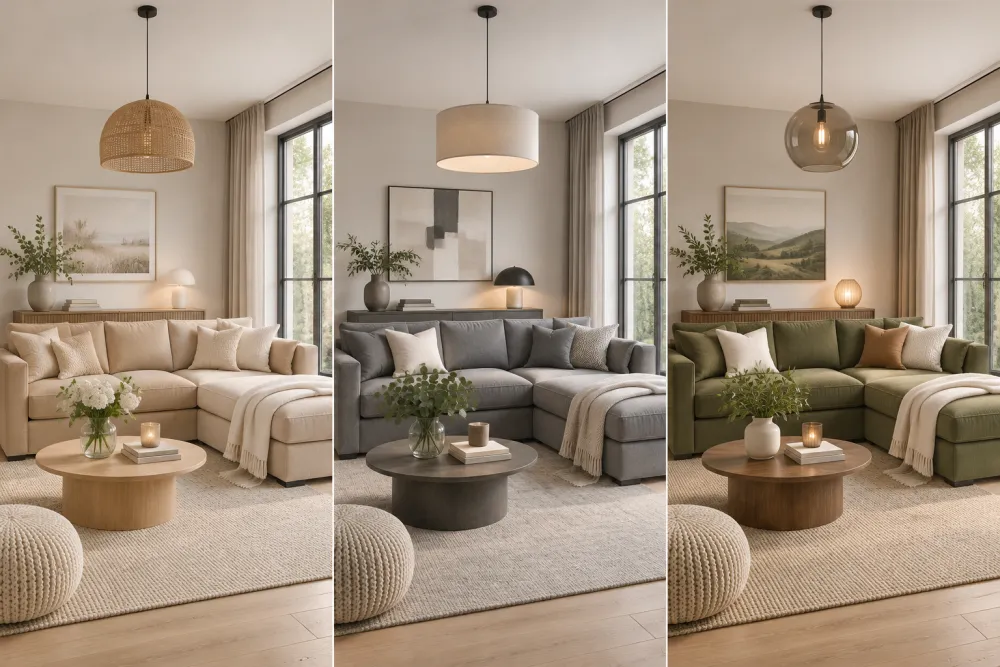
A corner sofa often becomes the main feature of the living room, so its colour and shape should suit the overall interior.
Versatile choices:
- Beige and cream shades.
- Light grey.
- Brown and earthy tones.
- Soft, muted shades.
Neutral colours are easy to match with other furniture and interior details.
If you like a bolder design, you can choose richer shades, such as green, blue or terracotta.
In smaller living rooms, furniture with lighter shapes often looks better, while in more spacious rooms you can choose larger corner sofas.
7. Consider not just the price, but also functionality
The price of a corner sofa matters, but the cheapest option is not always the most practical.
When comparing different models, pay attention to:
- The sofa dimensions.
- The sleeping function.
- The bedding storage box.
- The fabric properties.
- The construction and specification.
- Delivery terms.
- Warranty and return terms.
Sometimes a slightly more expensive model can offer more features or comfort, so in the long term it may better suit your needs.
The most common mistakes when choosing a corner sofa
Before ordering, make sure you avoid these mistakes:
- You didn’t measure the room and walkways.
- You didn’t check the corner direction.
- You didn’t compare the seat dimensions.
- You didn’t consider fabric care.
- You didn’t check the size of the sleeping area.
- You chose based on the photo alone.
- You didn’t read the delivery and return terms.
Frequently asked questions
Which corner sofa is best for a small living room?
For a small living room, more compact models are usually better. The main thing is to check the dimensions and leave enough space for easy movement.
Is it worth buying a corner sofa with a sleeping function?
Yes, if you need extra sleeping space. However, for everyday sleeping it is important to assess not only the opening mechanism, but also how comfortable the sleeping surface is.
Which fabric is most practical for families with children?
It is worth choosing easy-care fabrics whose abrasion resistance and cleaning properties meet the demands of intensive everyday use.
How can you tell a left-hand corner sofa from a right-hand one?
Stand in front of the sofa: if the chaise (corner part) is on the left, it is a left-hand corner sofa; if it is on the right, it is a right-hand one. That is how Jaukisofa.lt labels it. Other manufacturers may label it differently, so always check the diagram for the specific model.
To finish: how do you choose the most suitable option?
When choosing a corner sofa, the most important thing is to find the right balance between comfort, size, design and functionality.
Before buying, take time to compare the dimensions, fabric and extra features. A well-chosen corner sofa will become a cosy place to relax and a practical piece of living room furniture.
Looking for a corner sofa for your home? Browse the Jaukisofa.lt range of corner sofas and choose the model that best suits your needs.